Rit Ross as a Person in Her Own Right
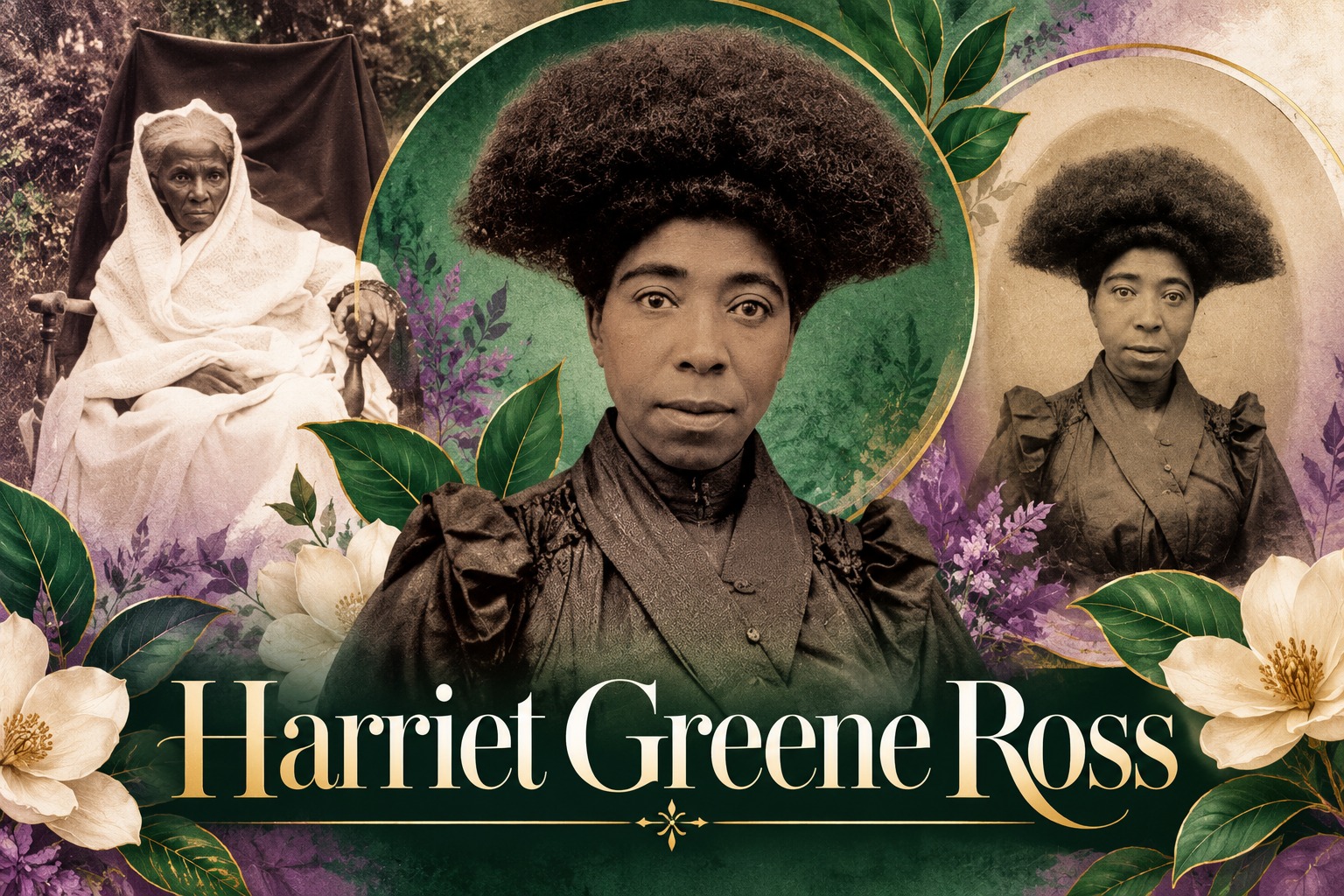
Harriet Greene Ross, often called Rit or Ritta, was the mother of Harriet Tubman. Her name also appears as Harriet Green Ross, with Green lacking the final e. I begin with that distinction because two generations of women named Harriet can easily merge in a brief account. Rit was the mother; Araminta Ross, later known as Harriet Tubman, was her daughter.
Rit lived under slavery in Dorchester County, Maryland. Her own biography is less extensively recorded than her daughter’s, but the surviving family history identifies a woman whose household was repeatedly threatened by separation.
Her precise birth date is uncertain. Estimates place her birth in the late eighteenth century. A rounded description is more appropriate than selecting an exact day or year from inconsistent summaries. The important setting is the Maryland slaveholding society into which she was born and within which she raised her children.
Work Under Slavery
Rit performed domestic work in the Pattison and Brodess household network. Descriptions of her duties include cooking and other household service. This was compelled labor under slavery, not an ordinary employment arrangement in which she could freely choose wages, hours, or residence.
I think that distinction is essential to the language of her biography. Calling her work a career without explaining enslavement would conceal the circumstances in which it took place. Her skills and labor were real, but the power over where she worked and whether her family could stay together rested with enslavers.
Her story therefore involves two overlapping demands: work imposed on her and the care she sought to provide for her own children. The family history shows how those responsibilities existed inside a system that treated people as property. It is that setting, rather than a speculative financial profile, that explains the constraints around her life.
Benjamin Ross and Their Household
Rit’s partner was Benjamin Ross, commonly called Ben. He worked in timber-related roles, including woodsman, timber estimator, and foreman. His work connected him with the wooded landscape and plantation economy of the same Maryland region.
Their marriage belonged to the customs of enslaved communities, since the law did not recognize enslaved marriages with the protections available to free people. The problem lay in the legal system’s refusal to protect it, not in the significance of the relationship to the people involved.
Ben later obtained his freedom through provisions connected to Anthony Thompson’s will. That changed his legal position, but freedom did not arrive for every family member at the same moment. His experience and Rit’s should not be combined into an assumption that the entire household became free together.
The two parents’ work also differed. Ben’s timber duties and Rit’s domestic service placed them in distinct parts of the plantation world, even as they belonged to the same family.
The Nine Ross Children
Rit and Ben had nine children. The names associated with the family are Linah, Mariah Ritty, Soph, Robert, Araminta, Ben, Rachel, Henry, and Moses. Variant spellings occur, including Sophy for Soph and Minty as a familiar name for Araminta.
I find the list important because Harriet Tubman’s later fame can obscure the size of the household around her. She was one child among siblings, with older and younger family members whose lives were affected by the same threat of sale.
Linah and Soph are among the daughters remembered as having been sold away. Such separations were not simply changes of address. They could remove children from parents and siblings without the family’s consent. The uncertainty of whether relatives could remain together formed part of ordinary life under slavery.
Moses, the youngest son, appears in accounts of Rit’s resistance to a proposed sale. She fought to protect him from being taken away. The significant fact is her refusal to accept the loss of another child quietly.
Araminta Becomes Harriet Tubman
Araminta Ross was born around 1820 to 1822. She became known as Harriet Tubman and escaped slavery in 1849. Her later work as an Underground Railroad conductor included efforts to bring family members to freedom.
The shared name carries an intimate connection between the generations. Yet their achievements remain distinct. Tubman’s escape, rescue work, and later Civil War service belong to the daughter. Rit’s place lies in the earlier household, her labor, her motherhood, and her resistance to family separation.
I see that connection as a thread rather than a shortcut. Rit’s actions offer context for Tubman’s concern for her relatives, but they do not let us reconstruct every influence on the daughter’s choices. Tubman developed her own work across circumstances far beyond the original Maryland household.
During the Civil War, Tubman served as a scout and nurse. She later lived in Auburn, New York, where care for family and community remained part of her life until her death in 1913.
A Family Network Beyond the Original Household
The family’s later history included movement north and life around Tubman’s Auburn household. Rit is associated with that later family setting, a substantial change from the conditions under which her children had been born.
Tubman married Nelson Davis and adopted a daughter, Gertie Davis. Gertie’s connection to Rit belongs through adoption within the family, not through a claim that she was Tubman’s biological child. I prefer that precise description because adoption is a real family relationship and does not need to be disguised as something else.
Ben’s home site and the Ross family’s Maryland history have also attracted renewed archaeological and educational attention. That work brings the older generation into view alongside Tubman’s better-known public life. The land, household traces, and family names help restore a context often compressed into a few sentences.
FAQ
Was Harriet Greene Ross the same person as Harriet Tubman?
No. Harriet Greene Ross, known as Rit, was Tubman’s mother. Tubman was born Araminta Ross and later became known as Harriet. Their shared name explains some confusion, but they belong to different generations.
Who was Harriet Greene Ross’s husband or partner?
Her partner was Benjamin Ross, commonly called Ben. He worked in timber-related roles and later gained freedom through provisions associated with Anthony Thompson’s will. Their marriage existed under enslaved community customs without full legal recognition.
How many children did Rit and Ben have?
They had nine children, including Araminta, who became Harriet Tubman. The family also included Linah, Mariah Ritty, Soph, Robert, Ben, Rachel, Henry, and Moses. Sales and threatened separations deeply affected the household.